Cleaning After Renovation: Removing Fine Dust and Debris Safely: Why "After Builders" cleaning requires specialized equipment.
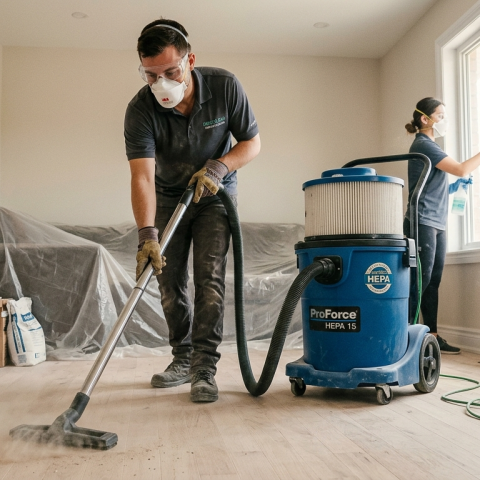
The scaffolding is down, the paint is dry, and your vision has finally come to life. But as you walk through your newly renovated space, you notice something: a thin, grey film covering every single surface.
Renovation dust isn't like regular household dust. It’s a stubborn, abrasive, and often microscopic byproduct of construction that requires more than a standard vacuum and a spray bottle to tackle. Here is why "After Builders" cleaning is a specialized science—and why your lungs (and your home) will thank you for professional intervention.
1. The Danger of Fine Particulate Matter
Construction dust—specifically from drywall, masonry, and wood—is incredibly fine. While standard dust settles, renovation dust stays airborne for days.
- Silica Dust: Found in bricks, mortar, and tiles, this can be hazardous if inhaled.
- The Filter Problem: A standard domestic vacuum cleaner isn't designed for this. The particles are so small they often pass right through a basic filter and are exhausted back into the air, creating a never-ending cycle of dust.
2. Specialized Equipment vs. Domestic Tools
Professional cleaners don't just show up with a mop. They bring an arsenal of industrial-grade machinery designed to trap particles at the molecular level.
Equipment Type
Why It’s Necessary
HEPA Industrial Vacuums
High-Efficiency Particulate Air (HEPA) filters trap 99.97% of particles as small as 0.3 microns.
Air Scrubbers
These portable filtration systems remove airborne contaminants while the cleaning is in progress.
Microfiber Encapsulation
Unlike cotton rags that move dust around, specialized microfibers "grab" and hold fine debris.
Industrial Steamers
Used to lift dust from porous surfaces without using harsh chemicals that could damage new finishes.
3. The "Hidden" Dust Traps
A post-construction clean isn't just about the floors. Fine dust has a way of defying gravity. Professionals follow a "top-to-bottom" protocol to ensure the dust doesn't resettle:
- HVAC Systems: Dust often gets sucked into the ductwork. If not cleaned, your AC will blow construction debris into your rooms for months.
- Light Fixtures & Bulbs: Dust on bulbs can burn and create odors when the lights are turned on.
- Wall Pores: Even "smooth" walls have texture that holds fine white powder; these require specialized damp-wiping techniques.
- Inside Cabinetry: Builders often leave sawdust inside hinges and drawer runners, which can grind down the hardware over time.
4. Protecting Your Investment
You’ve spent a significant amount of money on your renovation. Using the wrong cleaning method can actually cause damage:
- Scratches: Wiping dry construction dust off a window or a high-gloss cabinet with a paper towel can act like sandpaper, leaving permanent micro-scratches.
- Chemical Reactions: Certain new floor finishes or stone countertops react poorly to standard household cleaners.
Pro Tip: Never use a "dry" sweep method on renovation dust. Always use "wet" or "damp" methods with the correct pH-neutral solutions to prevent the dust from becoming airborne or abrasive.
The Bottom Line
Cleaning after a renovation is the final bridge between a construction site and a home. While it’s tempting to DIY the final stretch, specialized "After Builders" cleaning ensures that the air you breathe is safe and your new finishes remain pristine.
Are you ready to move into your new space without the mask? Give us a call today to schedule a professional post-construction deep clean.
What specific type of renovation did you just complete—a full gut-rehab or a targeted room remodel?